
By Meera | Mar 19, 2026 |
Small reflections that grow into deeper ways of living.
There are moments in life when we long for someone to understand us.
Someone who listens without judgment.
Someone who offers comfort when we feel overwhelmed.
Someone who reminds us that we are enough.
Sometimes we search for that safety in others.
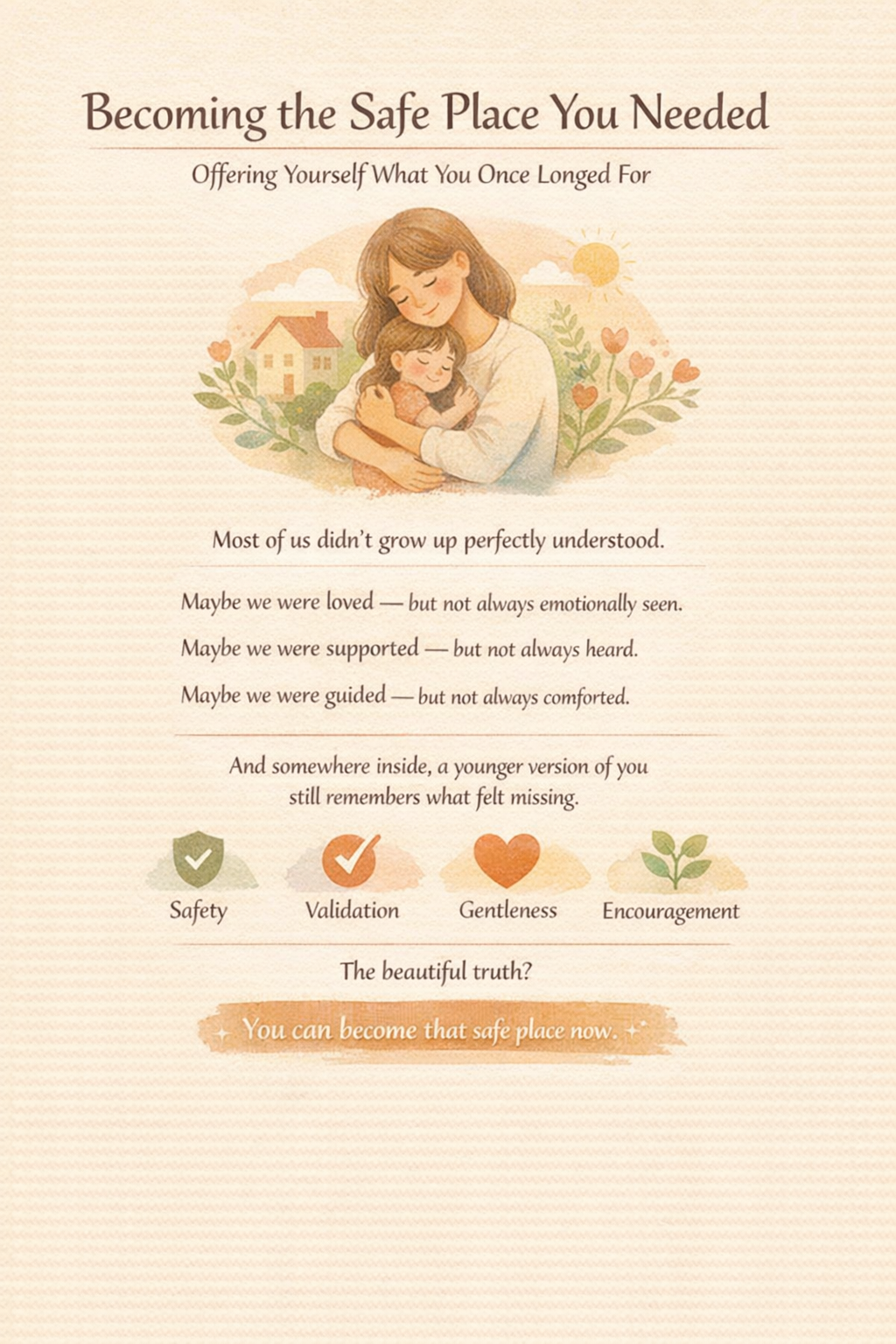
But one of the most powerful shifts we can experience is learning to become that safe place within ourselves.
A place where our thoughts are met with patience.
Our mistakes with compassion.
Our emotions with understanding.
🌱 Seed of the Week
The safety you once searched for in others can slowly grow within you.
🌿 🌿 🌿 🌿 🌿 🌿 🌿 🌿 🌿 🌿 🌿 🌿 🌿 🌿 🌿 🌿 🌿 🌿 🌿 🌿 🌿 🌿 🌿 🌿 🌿 🌿 🌿 🌿 🌿 🌿 🌿 🌿 🌿 🌿 🌿 🌿 🌿 🌿 🌿 🌿 🌿
🧭 Becoming the Safe Place You Needed
Many of us learned early in life to look outside ourselves for reassurance.
We hoped others would calm our fears, validate our feelings, or guide us when things felt uncertain.
And while supportive relationships are deeply valuable,
emotional stability becomes stronger when we also develop inner safety.
Inner safety means being able to sit with your thoughts and emotions
without immediately criticizing or rejecting them.
It means learning to respond to yourself with the same care you might offer a close friend.
Instead of asking, “What is wrong with me?”
you begin asking, “What might I need right now?”
This subtle shift transforms the way we relate to ourselves. 🌱
— — — 🌿 — — —— — — 🌿 — — —— — — 🌿 — — —— — — 🌿 — — —— — — 🌿 — — —— — — 🌿 — — —— — — 🌿 — — —— — — 🌿 — — ——
📖 A Story
A young child once fell and scraped their knee while playing.
The child immediately looked around for a familiar face - someone
who could reassure that everything would be okay.
Years later, that same person faced a difficult moment in life.
There was no parent nearby, no one immediately available to offer comfort.
For a moment, they felt the same vulnerability they had felt as a child.
But then something unexpected happened.
Instead of criticizing themselves for struggling, they paused and placed a hand over their heart.
They spoke to themselves gently, the way a caring voice might have done years before.
And in that moment, they realized something powerful:
They had begun to become their own safe place.
🔍
Inner safety grows when we learn to respond to ourselves with compassion. 🌱
— — — 🌿 — — —— — — 🌿 — — —— — — 🌿 — — —— — — 🌿 — — —— — — 🌿 — — —— — — 🌿 — — —— — — 🌿 — — —— — — 🌿 — — ——
💡 Why Inner Safety Matters
When we feel emotionally safe, the mind and body can relax.
But when we constantly judge or criticize ourselves, the nervous system may remain in a subtle state of tension.
Thoughts such as:
“I shouldn’t feel this way.”
“I should be stronger.”
“What’s wrong with me?”
can create an internal environment of pressure rather than support.
Inner safety allows space for emotions to be acknowledged without immediately needing to fix or suppress them.
From that space, healing and clarity often become possible.
— — — 🌿 — — —— — — 🌿 — — —— — — 🌿 — — —— — — 🌿 — — —— — — 🌿 — — —— — — 🌿 — — —— — — 🌿 — — —— — — 🌿 — — ——
🎬 Movie & Series Examples
🍿 1. Good Will Hunting – From Wounded to Safe Presence
What he lacked:
Safety, acceptance, emotional protection.
What he becomes:
Through healing, Will begins to soften - and Sean models what a safe presence feels like.
Insight:
We often become safe by first experiencing safety - and then choosing to embody it.
🎥 2. Matilda – Creating Safety Where It Didn’t Exist
What was missing:
Care, kindness, emotional safety.
What is created:
Miss Honey becomes the safe space Matilda needed.
Insight:
Sometimes the safest place is a person who chooses to be gentle.
🎬 3. Grey’s Anatomy (TV) – Becoming Your Own Anchor
What was missing:
Stability, emotional safety in early life.
What she becomes:
Grounded, steady, and emotionally resilient - for herself and others.
Insight:
At some point, you become the person you once needed.
🍿 4. The Blind Side – Offering the Safety You Didn’t Have
What was missing:
Home, protection, belonging.
What is created:
A safe environment where growth becomes possible.
Insight:
Safety is the foundation from which everything else grows.
“Healing is when you become the safe place you once searched for.” 🌱
🌍 Real-Life Situations
Inner safety can appear in small everyday moments.
When you make a mistake: Instead of harsh criticism, you respond with patience.
When you feel overwhelmed: Instead of suppressing the emotion, you allow yourself to pause and breathe.
When you experience uncertainty: You remind yourself that it is okay not to have all the answers immediately.
These small shifts slowly create a sense of trust within yourself.
— — — 🌿 — — —— — — 🌿 — — —— — — 🌿 — — —— — — 🌿 — — —— — — 🌿 — — —— — — 🌿 — — —— — — 🌿 — — —— — — 🌿 — — ——
💬 Quotes That Reflect This Truth
“You yourself, as much as anybody in the entire universe, deserve your love and affection.” - Buddha
“Talk to yourself like someone you love.” - Brené Brown
“Compassion begins with the recognition that we are all imperfect.” - Kristin Neff
🛠️ How to Become Your Own Safe Place
Inner safety grows through small practices of self-compassion.
1. Notice Your Inner Voice
Pay attention to how you speak to yourself during difficult moments.
Would you say the same words to a close friend?
Awareness is the first step.
2. Respond With Gentle Language
Instead of: “What’s wrong with me?”
Try: “This is a difficult moment, and I’m doing my best.”
Gentle language calms the mind.
3. Allow Emotions Without Judgment
Emotions are signals, not problems.
Instead of resisting a feeling, acknowledge it:
“I notice I’m feeling anxious right now.”
Recognition creates space.
4. Offer Yourself Reassurance
Simple statements such as:
“I can handle this.”
“I’m learning.”
“I’m here for myself.”
can help the nervous system feel supported.
— — — 🌿 — — —— — — 🌿 — — —— — — 🌿 — — —— — — 🌿 — — —— — — 🌿 — — —— — — 🌿 — — —— — — 🌿 — — —— — — 🌿 — — ——
💛 The Joy Connection
Joy often grows in environments of emotional safety.
When we stop fighting our own thoughts and emotions, we create space for calm and self-acceptance.
Instead of feeling like we must constantly prove ourselves,
we begin experiencing a deeper sense of belonging within our own lives.
And from that place of inner support, joy can begin to appear more naturally.
— — — 🌿 — — —— — — 🌿 — — —— — — 🌿 — — —— — — 🌿 — — —— — — 🌿 — — —— — — 🌿 — — —— — — 🌿 — — —— — — 🌿 — — ——
🧠 NLP Insight
In Neuro-Linguistic Programming, the way we speak to ourselves internally plays a powerful role in shaping our emotional state.
Many people carry an internal voice modeled from past experiences -
often from authority figures such as parents, teachers, or early environments.
If those voices were critical, demanding, or dismissive, our internal dialogue can unconsciously repeat the same patterns.
NLP suggests that we can repattern this inner dialogue by intentionally changing the language, tone, and perspective we use with ourselves.
For example, instead of hearing an internal voice say:
“I shouldn’t feel this way.”
You can consciously shift the language to:
“It’s okay to feel this. I’m here with myself.”
This shift does more than change words. It changes the emotional state attached to the experience.
In NLP terms, this creates a new internal resource state - one of safety, support, and self-compassion.
Over time, repeatedly speaking to yourself with reassurance and understanding
allows the mind to associate your inner voice with comfort rather than criticism.
In this way, you gradually become the safe place you once searched for outside yourself.

🧠 Neuroscience Insight
When we respond to ourselves with kindness rather than criticism,
the brain and nervous system shift toward a more regulated state.
Harsh self-judgment can activate the brain’s threat-detection systems, increasing stress hormones and emotional tension.
In contrast, practices of self-compassion can activate neural pathways associated with emotional regulation and safety.
Areas of the brain involved in empathy and connection become more engaged, helping calm the nervous system.
Through neuroplasticity, repeated experiences of self-support gradually strengthen the brain’s capacity for emotional resilience.
Over time, the mind learns a new message:
Safety is available - even within ourselves.
— — — 🌿 — — —— — — 🌿 — — —— — — 🌿 — — —— — — 🌿 — — —— — — 🌿 — — —— — — 🌿 — — —— — — 🌿 — — —— — — 🌿 — — ——
🪞 Reflection for This Week
Pause for a moment and ask yourself:
• When do I feel most critical of myself?
• What might I need in those moments instead?
• How could I respond with more compassion?
Sometimes the first step toward healing is simply learning to listen to ourselves differently.
📝 Practice for the Week
For the next seven days, notice moments when you feel stressed, uncertain, or self-critical.
When that happens, pause and ask yourself:
“What would a supportive voice say to me right now?”
Then offer yourself those words.
Place a hand on your heart if it helps you feel grounded.
Small moments of self-compassion can slowly transform the relationship you have with yourself.
✨This week’s seed is simple: The safety you once searched for in others can slowly grow within you.. 🌱
🌿 🌿 🌿 🌿 🌿 🌿 🌿 🌿 🌿 🌿 🌿 🌿 🌿 🌿 🌿 🌿 🌿 🌿 🌿 🌿 🌿 🌿 🌿 🌿 🌿 🌿 🌿 🌿 🌿 🌿 🌿 🌿 🌿 🌿 🌿 🌿 🌿 🌿 🌿 🌿 🌿
🌱 Every thought plants a seed. Choose the ones that grow into joy.
Enjoy every moment of your life, Live Joyfully :)
✨ Choose consciously. Live joyfully. Become who you’re meant to be.
Pause for a moment & Share
Sometimes it’s the smallest decisions that can change your life forever.
✨ Choose consciously. Live joyfully. Become who you’re meant to be.
©2023 All Rights Reserved