
By Meera | Oct 2026
🌟 Nine Nights of Devotion, Dance, and Divine Celebration
🌿 Celebrating the Divine Power of the Goddess
Navratri is a time when devotees come together to worship Goddess Durga and celebrate the divine feminine energy, known as Shakti.
It is believed that this energy represents the power that creates, nurtures, protects, and transforms the universe.
During these nine days, homes and temples are decorated, lamps are lit, prayers are offered,
and special rituals are performed to seek the Goddess's blessings.
Many devotees observe fasts, follow traditional practices, and spend time in prayer and devotion.
Navratri is a celebration of Shakti – the eternal power of the Goddess, whose strength, compassion, courage,
and wisdom are honoured through nine nights of devotion and faith.
🪔 The Spirit and Meaning of Navratri
Navratri is one of India's most cherished festivals, deeply rooted in faith, mythology, and cultural traditions.
It is dedicated to the worship of Goddess Durga, who represents the
supreme feminine force and the strength of the universe.
The festival is associated with the legendary battle between Goddess Durga and Mahishasura,
a powerful demon who had become a threat to the world.
After a fierce battle lasting nine days and nights, the Goddess defeated him, restoring peace and balance.
This victory is celebrated as the triumph of good over evil.
Navratri also honours the many forms of the Goddess, each representing a distinct aspect of divine power.
Through these celebrations, devotees express their gratitude, seek blessings, and
participate in rituals that have been passed down through generations.
For many communities, Navratri also marks a seasonal transition and an auspicious time for new beginnings.
It brings together devotion, music, dance, art, and age-old customs, making it both a spiritual and cultural celebration.
At its heart, Navratri honours the divine feminine and the enduring place of Goddess Durga
in India's religious and cultural heritage
🔥The Story Behind the Celebration.
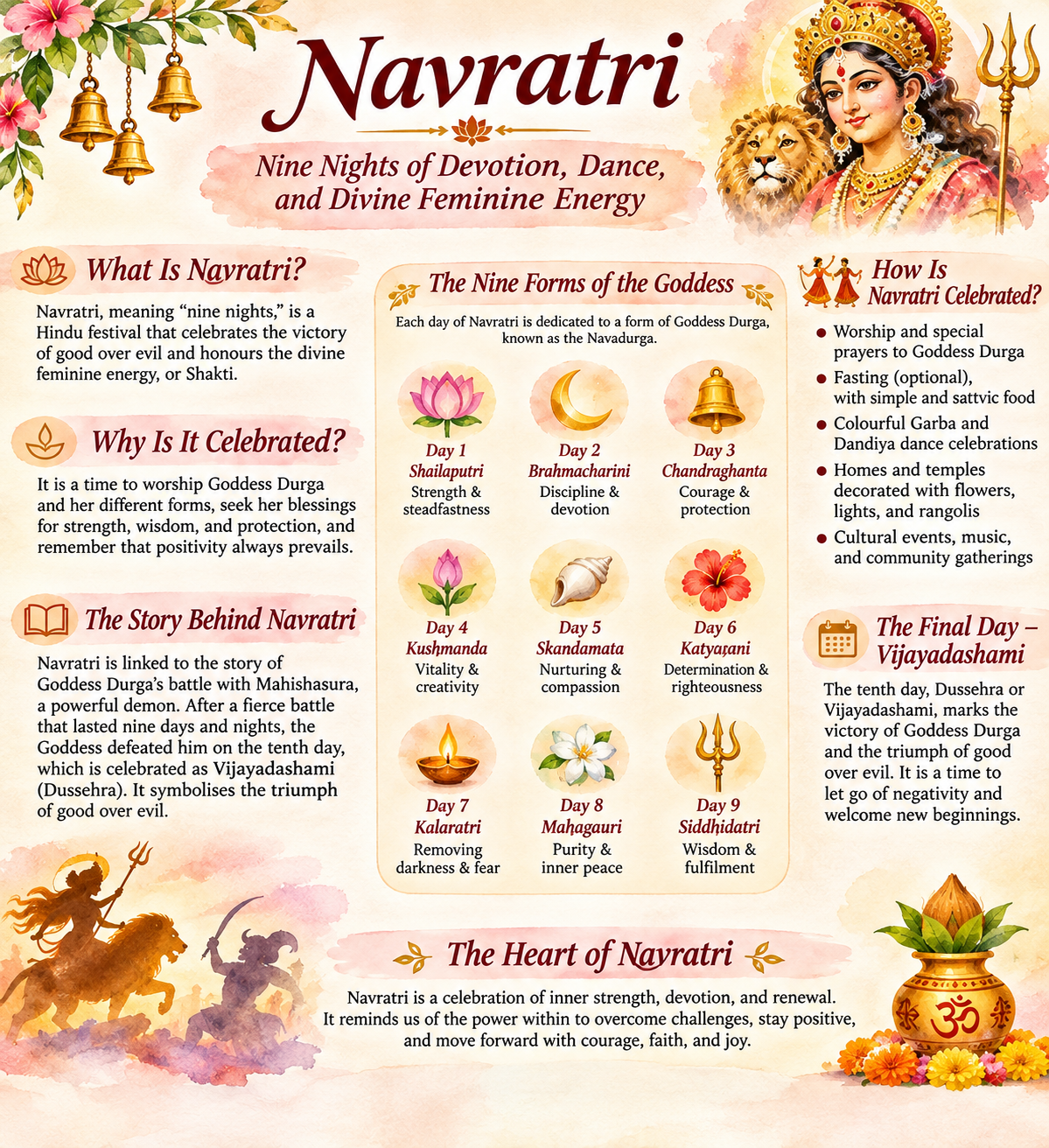
There are actually two major mythological traditions connected with the festival.
1. Goddess Durga and Mahishasura
This is the story where Goddess Durga fought the demon Mahishasura for nine days and defeated him on the tenth day.
This represents the victory of good over evil.
2. Lord Rama and Goddess Durga
Before his battle with Ravana, Lord Rama worshipped Goddess Durga and
sought her blessings for victory.
Rama offered 108 blue lotuses to the Goddess.
When he discovered that one lotus was missing, he decided to offer one of his eyes instead, as his eyes were often compared to lotus petals.
Moved by his devotion, Goddess Durga appeared before him
and blessed him with victory.
This worship is traditionally associated with Akal Bodhan, the invocation of Goddess Durga at an unusual time of the year.
Rama subsequently defeated Ravana, and this victory is celebrated as Vijayadashami or Dussehra.
- Eastern and Southern India: The focus is primarily on Goddess Durga's victory over Mahishasura.
- Northern India: The Navratri period is associated with Lord Rama's battle against Ravana, culminating in Dussehra.
- Both traditions: Celebrate the triumph of righteousness over evil.
🎉 Nine Days of Navratri – Nine Forms of the Divine
Navratri is celebrated over nine nights, with each day
dedicated to one of the nine forms of Goddess Durga, collectively known as Navadurga.
Each form represents a different aspect of divine feminine energy, symbolising strength, devotion,
courage, compassion, and wisdom.
The celebrations culminate in Vijayadashami, marking the victory of good over evil.
Here is a glimpse of the nine days:
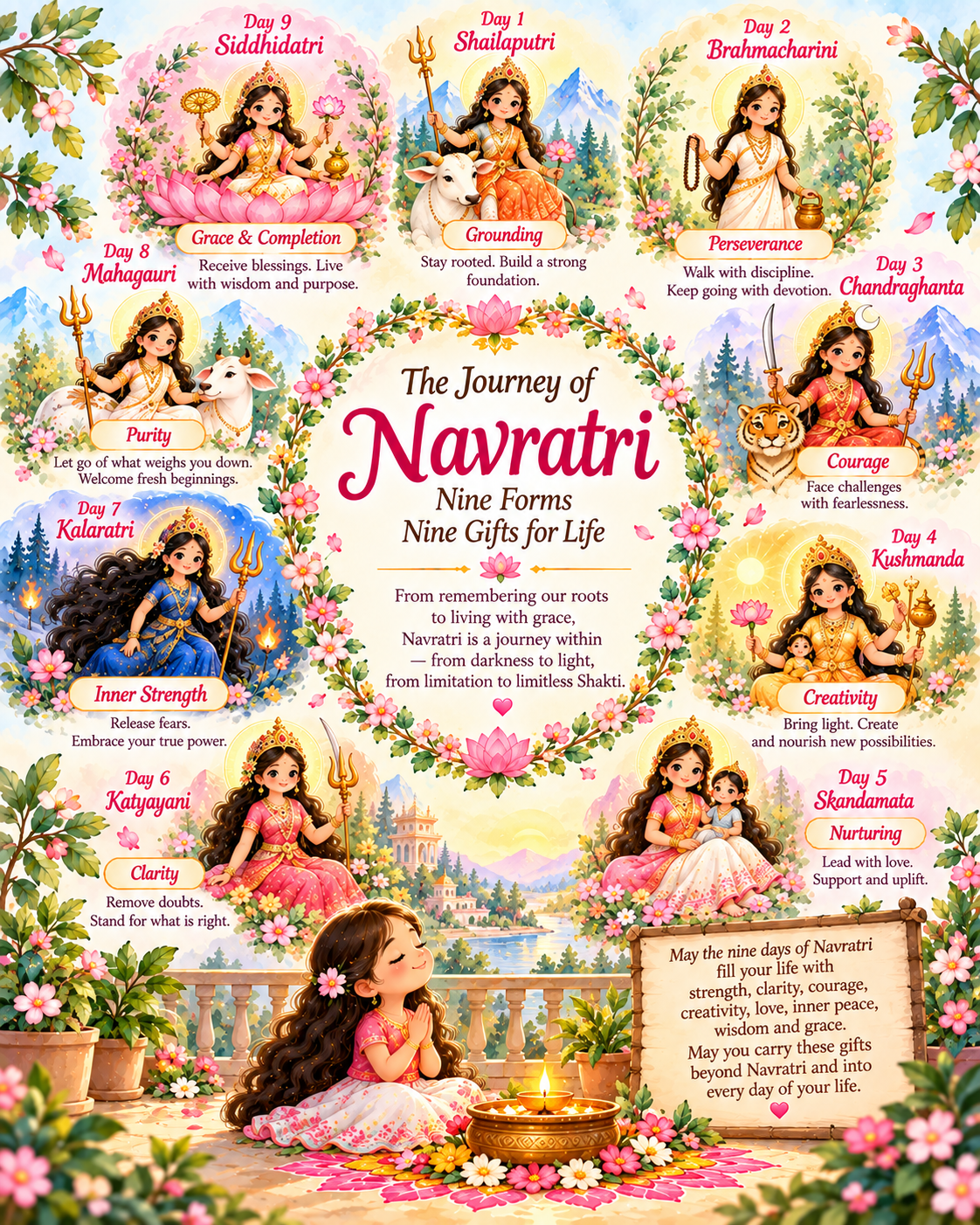
1. Pratipada – Goddess Shailaputri 🌸
The first day honours Shailaputri, the daughter of the mountains.
She represents strength, purity, and determination. She is depicted riding a bull and holding a trident and lotus.
2. Dwitiya – Goddess Brahmacharini 🙏
The second day is dedicated to Brahmacharini, who symbolises devotion, discipline, and perseverance.
She represents the importance of dedication and commitment on the spiritual path.
3. Tritiya – Goddess Chandraghanta 🔔
The third day celebrates Chandraghanta, recognised by the crescent-shaped bell on her forehead.
She represents courage, bravery, and protection against evil.
4. Chaturthi – Goddess Kushmanda ☀️
The fourth day honours Kushmanda, who is believed to have created the universe with her divine smile.
She represents creativity, vitality, and the life-giving energy of the universe.
5. Panchami – Goddess Skandamata 🌼
The fifth day celebrates Skandamata, the mother of Lord Skanda (Kartikeya).
She symbolises motherhood, love, compassion, and nurturing protection.
6. Shashthi – Goddess Katyayani 🪷
The sixth day is dedicated to Katyayani, a powerful warrior form of Goddess Durga.
She represents courage, determination, and the strength to overcome injustice.
7. Saptami – Goddess Kalaratri 🪔
The seventh day honours Kalaratri, the fierce form of the Goddess who destroys darkness and evil.
She represents fearlessness and protection from negative forces.
8. Ashtami – Goddess Mahagauri 🤍
The eighth day celebrates Mahagauri, who symbolises purity, peace, and tranquillity.
She is associated with compassion, forgiveness, and spiritual cleansing. Many devotees observe special prayers and Kanya Puja on this day.
9. Navami – Goddess Siddhidatri ✨
The ninth day honours Siddhidatri, the Goddess who grants wisdom, spiritual accomplishments, and divine blessings.
She represents knowledge, fulfilment, and completeness.
🌺 The Nine Nights, One Divine Celebration
Each day of Navratri honours a different manifestation of Goddess Durga, celebrating the many expressions of feminine divinity.
Together, these nine forms represent the power that protects, nurtures, inspires, and transforms.
The nine nights lead to Vijayadashami, the celebration of the triumph of good over evil.
Nine forms. Nine nights. One celebration of divine strength and grace.
🌺 Traditions Across India
Navratri is celebrated differently across India, with each region adding its own cultural beauty and traditions.
- Gujarat: The nights are filled with energetic Garba and Dandiya Raas.
People dress in colourful traditional outfits and dance in large circles, celebrating the Goddess through music and movement.
- West Bengal: Navratri is the grand celebration of Durga Puja.
Beautifully decorated pandals display magnificent idols of Goddess Durga, and people gather for prayers, cultural programmes, and community festivities.
- South India: Mysuru Dasara is one of the most famous Navratri celebrations.
The Mysore Palace is illuminated, and the festivities include cultural performances, processions,
and the worship of Goddess Chamundeshwari.
Ayudha Puja is also an important tradition, when tools, vehicles, and instruments are worshipped.
Families arrange beautiful displays of dolls known as Golu or Bommai Kolu.
These displays often depict gods, goddesses, mythological stories, and scenes from everyday life.
Friends and relatives visit one another's homes, exchange gifts, and sing devotional songs.
The final days are dedicated to Goddess Saraswati, the deity of knowledge and learning.
Books and musical instruments are worshipped, and is considered an auspicious day for Vidyarambham, the initiation of young children into learning.
- North India: Devotees observe fasts, organise devotional gatherings, and perform Ramlila, which depicts the story of Lord Rama.
The celebrations culminate in Dussehra, when effigies of Ravana are burnt to symbolise the victory of good over evil.
These different celebrations reflect India's cultural diversity while bringing people together through a shared spirit of devotion.
❤️ The Heart of Navratri
Navratri is a celebration of strength, faith, and the power of goodness.
Through the story of Goddess Durga, it reminds us that courage can overcome fear, determination can
overcome difficulties, and goodness can triumph over negativity.
Beyond the rituals, fasting, music, and celebrations, Navratri invites us to recognise the strength
within ourselves and face life's challenges with faith and courage.
May these nine nights inspire us to embrace our inner strength, celebrate the goodness around us,
and welcome new beginnings with devotion and joy.
🌼 Happy Navratri!
✨ Choose consciously. Live joyfully. Become who you’re meant to be.

©2023 All Rights Reserved